
RuCCS Post Doctoral Associates
Rutgers Center for Cognitive Science (RuCCS)
-

Andre Eliatamby
- Information
This email address is being protected from spambots. You need JavaScript enabled to view it. André is a first language acquisition researcher interested in the acquisition of determiner phrase semantics and logical connectives, the early acquisition of functional categories, and theoretical issues concerning the semantics/pragmatics interface. He has a secondary interest in statistical methods, inductive inference, and the role of input in language acquisition. He received his Ph.D. in Linguistics from the CUNY Graduate Center in 2024.
-

Callan Howland
- Information
This email address is being protected from spambots. You need JavaScript enabled to view it. Callan (Cal for short) received their PhD in Philosophy from Rutgers University. They work at the interface of semantics, pragmatics and psycholinguistics, with a particular eye toward the role of perspectives in lexical meaning. Drawing on both experimental and theoretical methodology, their research revolves around questions like: How capable are hearers in accommodating stubborn speakers? How conversationally flexible are lexically encoded perspectives? Do different categories of lexical items (e.g. predicates of personal taste, relative motion verbs, socio-cultural relative terms) exercise different constraints on the perspectives they invoke? Topics they have worked on include relative locative terms, socio-cultural relatives, and epithets and thick terms.
-

Andre Oliver
- Information
This email address is being protected from spambots. You need JavaScript enabled to view it. Andre earned his PhD in Psychology from the Graduate Center—City University of New York (CUNY) in 2025. His research broadly focuses on social identity, person perception, and social inequality. In this work, he investigates how social identity shapes people's mental representations of faces from specific social groups and how those mental representations influence decisions and judgements about social inequality. He also studies how social identity-related cognitions impact intergroup interactions and expectations to develop interventions to improve those interactions.
-

Sten Knutsen
- Information
This email address is being protected from spambots. You need JavaScript enabled to view it. Sten’s research focuses on spoken language, especially prosody and its role in comprehension and production. He is interested in both the acoustic realization of prosody and its functional role in communication, examining how patterns vary across gender, neurodivergent populations, and language backgrounds. His work draws on psychology, linguistics, and computer science to better understand the cognitive underpinnings of speech. Sten received his Ph.D. in psychology from Rutgers University in 2025.
-

Jocelyn Yuxing Wang
- Information
This email address is being protected from spambots. You need JavaScript enabled to view it. Jocelyn received her PhD in philosophy from MIT in 2024, prior to which she received her BA in philosophy from Yale. Her research interests are at the intersection of cognitive science, philosophy of mind, and epistemology. Her research broadly considers creative thought, and other closely related forms of unguided thoughts, such as mind wandering. Some of her research theorizes about the role of attention, memory and other underlying processes of creative thoughts, as well as how understanding them better brings out implications in epistemology. She also has broader research interests in providing philosophical interpretations of computational models in cognitive science.
-

Elif Poyraz
- Information
This email address is being protected from spambots. You need JavaScript enabled to view it. Elif received her Ph.D. in Cognitive Psychology from Rutgers University in 2025, along with a certificate in Cognitive Science. She earned her B.S. in Psychology from Middle East Technical University in Türkiye. Her research investigates how people understand and reason about others’ actions without direct access to their thoughts, with a particular focus on the developmental origins of this ability. She examines the factors that shape children’s performance on tasks requiring reasoning about mental states, as well as developmental changes in variability over time. At the Cognition and Learning Center, she studies how children’s inferences about others’ mental states extend to different domains, such as numerical quantities of resources.
Rutgers University Post Doctoral Affiliates
Post Doctoral RuCCS Laboratory Affiliates
-

Theodoros Bermperidis
- Information
Theo is an Electrical Engineer with a strong mathematical training interested in advancing methods of machine learning and AI for smart health and applications to sports and the performing arts. He has completed his MSci in Psychology and developed several analytical models to automatically classify complex behaviors and distinguish different phenotypes. More recently, Theo has developed new methods of analyses to interrogate the transcriptome in humans and mice models.
This email address is being protected from spambots. You need JavaScript enabled to view it.
Tracking Tiny Facial Movements Can Reveal Subtle Emotions in Autistic Individuals
- April 15, 2025
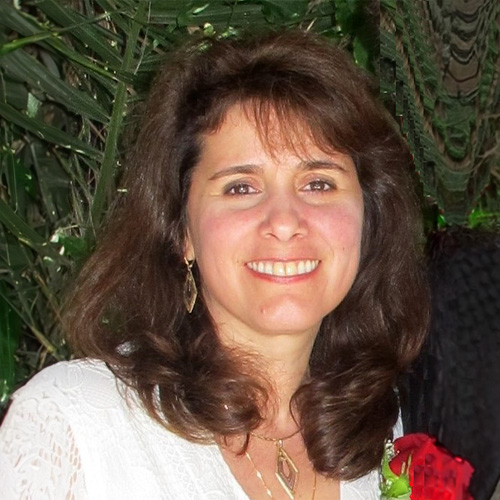
A Rutgers-led study examines how detecting microscopic facial movements, previously overlooked, are key to enhancing emotional recognition in autistic individuals. A study led by Rutgers University–New Brunswick researchers suggests that tiny facial movements too slight for the human eye to notice – could help scientists better understand social communication in people with autism. Published in Frontiers in Psychiatry, the study found that while individuals with autism express emotions like everyone else, their facial expressions may be too subtle for the human eye to detect. “Autistic individuals use the same basic facial movements to express emotions, but their intensity often falls outside the culturally familiar range that most people recognize,” said Elizabeth Torres, a psychology professor at the Rutgers–New Brunswick School of Arts and Sciences. “This disconnect can lead to missed social cues, causing others to overlook or misinterpret their emotions.”

Professor Torres has published a new book by Elsevier Academic Press entitled, "Autism Autonomy: In Search of Our Human Dignity."
-
- October 9, 2024
Her book provides a new and unifying methodological framework and discusses machine learning and biometrics techniques to diagnose, characterize, and treat patterns of sensory motor control underlying autism symptoms. With the hope of improving basic research in these areas, this volume will allow readers to design better interventions and provide awareness of a number of new technologies used in the autism field. Wearable bio-sensing technologies, machine learning, and AI methods are all discussed regarding their applications to provide better self-awareness, interaction, diagnosis, and prognosis.
For more books written by Prof Torres, please visit:https://sensorymotorintegrationlab.com/books/

Congratulations to Pernille Hemmer, Ryan Rhodes, & Bruce Tesar for receiving the 2022-23 Distinguished Contributions to Undergraduate Award
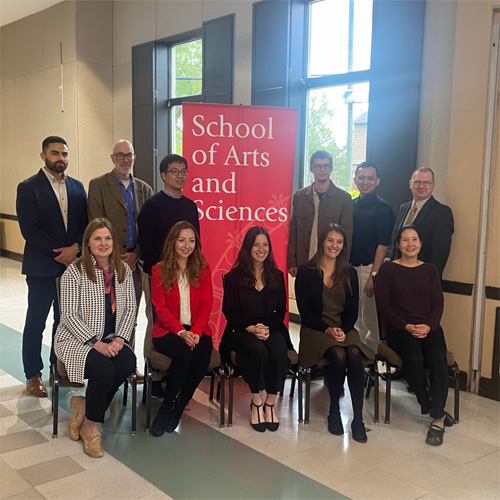
2022-23 Distinguished Contributions to Undergraduate Education Awards reception took place on Wednesday, May 3rd from 2:30 PM-4:30 PM in Trayes Hall at the Douglass Student Center. We celebrated Pernille Hemmer, Ryan Rhodes, & Bruce Tesar on their inspiring contributions to undergraduate education.
- Spring 2023 Cognitive Science Evolution, Cognition and Culture class field trip
- RuCCS Affiliate, Victoria Abraira receives a National Institute of Neurological Disorders and Stroke KO1 for 1.22 Million over 5 years
- Michael Lewis awarded the Board of Trustees Award for Excellence in Research
- Elizabeth Torres awarded the Board of Trustees Award for Excellence in Research
Page 9 of 29