
Cell Phone or Laptop Use During Class Can Significantly Lower Exam Scores

Put your cellphone down! Research coming from the lab of Arnold Glass (Psychology) is getting cited in the media. In his study, students in classes with cellphones and laptops allowed scored significantly lower on exams. You can read more about this work in a recent ABC News report.
Incoming Grad Student, Richa Rai, Awarded an Excellence Fellowship
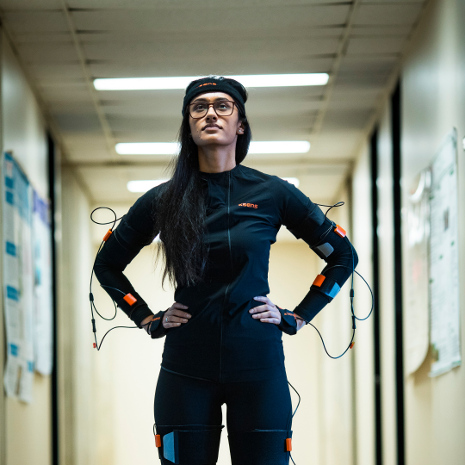
Incoming graduate student in Psychology, Richa Rai, was awarded an Excellence Fellowship by the Dean’s office. This is a competitive fellowship, offered to a limited number of students who demonstrate outstanding qualifications. She will be working with Elizabeth Torres (Psychology).
RuCCS - The Only Unit Entered Into the Entrepreneurial Award Program
RuCCS was selected as the only unit in SAS to be entered into the Entrepreneurial Award Program, which offers funds and support to initiate a collaborative exchange with Chinese students.
Dr. Paul Pietroski Released His New Book

 Dr. Paul Pietroski (Philosophy) released his book to critical acclaim that argues for a version of “semantic internalism” and proposes an original account of how language works entitled, Conjoining Meanings: Semantics without Truth Values.
Dr. Michmizos wins the Intel Grant Award on Neuromorphic Computing
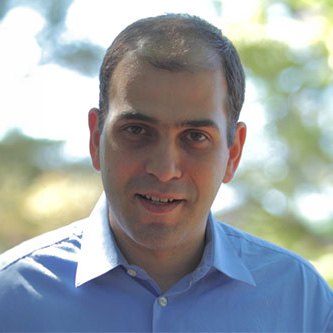
Konstantinos Michmizos won an Intel Grant Award on Neuromorphic Computing for his single-PI proposal entitled "Spike-based Active SLAM for autonomous robots developing action habits."
Konstantinos's efforts are timely placing our Department at the center of the emerging Neuromorphic Community and introduces Rutgers as one of the 10 research universities in the world having access to Intel's unique neuromorphic chip.
Intel is introducing Loihi, the first-ever neuromorphic chip that emulates how neurons in the brain process and learn information, and the INRC, Intel Neuromorphic Research Community to shape this direction, through its first, global, request for research proposals.
The Award will allow Konstantinos and his students to grow astrocytes into spiking neural networks (SNN) and enable the home-built robots to develop "action habits", just like humans.
The Grant aligns with ComBra Lab's ongoing efforts to shake the "neurocomputing" dogma, where "brain = neurons", and introduce algorithms employing an abundant yet long-neglected brain cell, astrocytes, with unique computational capabilities.
The $180,000 Award will provide a 2-year support for a PhD student at ComBra Lab, Guangzhi Tang, who completed his MSc. Thesis at ComBra in Spring 2017 and is now continuing his research on NeuRobots as a PhD student in the Lab.
Page 13 of 29